

July 25, 2026
By Prasad Hedge, Manish Raniga & Rajiv Sai
For more than a century, advances in medicine have been measured by one principal outcome: longer life expectancy.
Societies have celebrated increases in lifespan as evidence of progress, driven by improvements in sanitation, vaccines, pharmaceuticals and medical intervention. Yet longevity alone no longer defines success.
The challenge facing governments, employers, investors and healthcare systems today is not simply helping people live longer. It is enabling them to remain healthier, more productive and more independent throughout those additional years.
This shift, from lifespan to healthspan, represents one of the most significant structural transitions of the coming decades.
Healthspan, defined as the number of years lived in good physical, cognitive and emotional health, is rapidly becoming an economic imperative. Rising healthcare expenditure, ageing populations, chronic disease and workforce productivity are forcing policymakers and capital markets to rethink how health is created, measured and financed.
At the same time, consumers are fundamentally changing their relationship with health. Wellness is no longer viewed as discretionary spending or a luxury lifestyle choice. Increasingly, it is becoming an investment in future quality of life.
This paper explores why healthspan is emerging as a defining economic theme, how it is reshaping industries and investment strategies, and why organisations that recognise this transition early will be best positioned to create long-term value.
The emergence of the healthspan economy is not the result of a single innovation, but the convergence of several technological, demographic and behavioural shifts occurring simultaneously.While this paper establishes the macroeconomic case for healthspan, the underlying drivers of this transition and their implications for future business models will be explored in subsequent papers within this series.
For decades, the global conversation centred on one question. How can we help people live longer? The next decade asks a different question.
How can we ensure those additional years are worth living?
Medical innovation has extended life expectancy across much of the world. Yet the number of years spent living with chronic illness has also increased. A longer life without good health places growing pressure on healthcare systems, employers, families and public finances.
Health is no longer solely a healthcare issue. It influences:
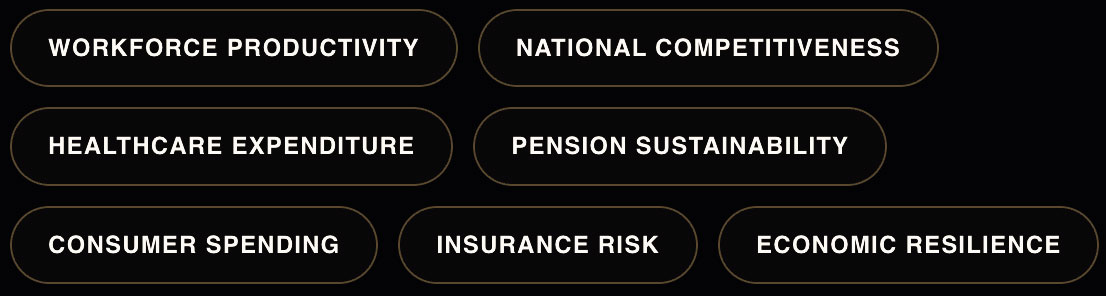
As populations age, healthy years become one of the most valuable economic assets a nation can possess. Countries that improve healthspan may reduce healthcare costs while increasing labour participation, entrepreneurship and overall quality of life.
Historically, healthcare spending occurred after illness. Today's consumer increasingly invests before illness appears. Spending has shifted towards:
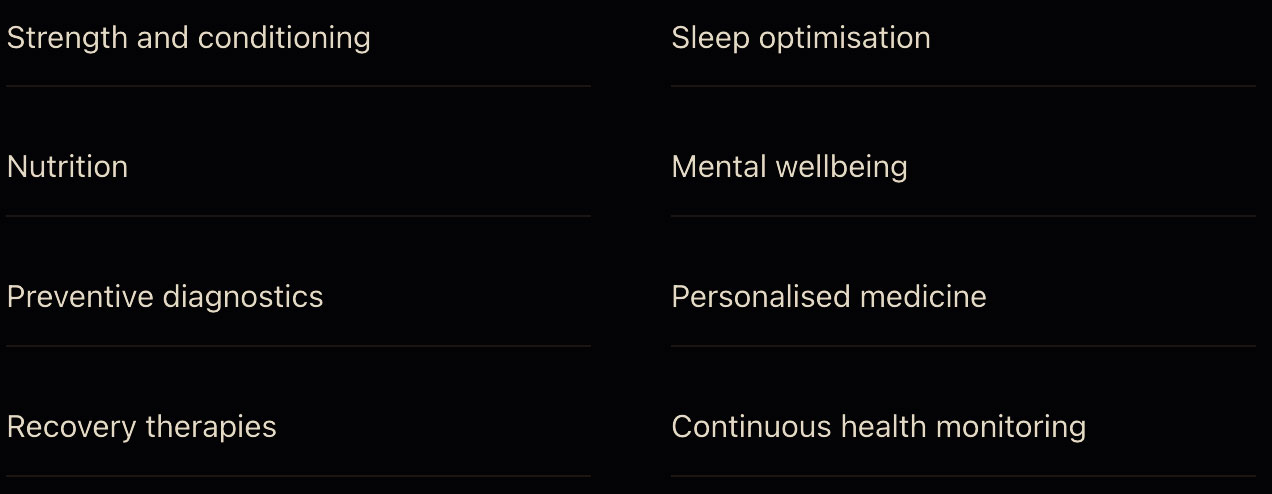
Consumers are no longer waiting for healthcare systems to intervene. They are proactively investing in maintaining performance throughout life.
The boundaries between healthcare, fitness, wellness and technology are rapidly disappearing. Consumers increasingly expect a connected ecosystem rather than isolated services.
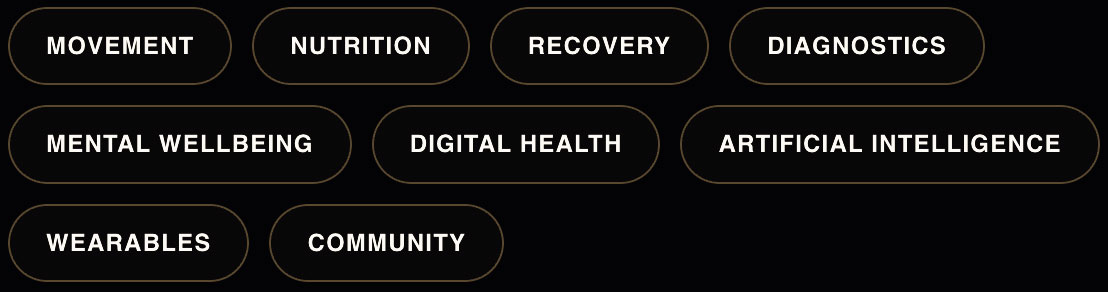
These sectors are converging into a single economic category centred on human performance. The businesses that integrate these capabilities will be better positioned than those operating independently.
As these previously distinct sectors converge, value creation is increasingly shifting from individual products and services towards connected ecosystems that deliver measurable health outcomes.Understanding how these ecosystems will evolve, and what the next generation of healthspan platforms may look like, represents the next stage of this discussion.
Institutional investors have traditionally favoured industries characterised by recurring revenue, structural growth and resilient consumer demand.
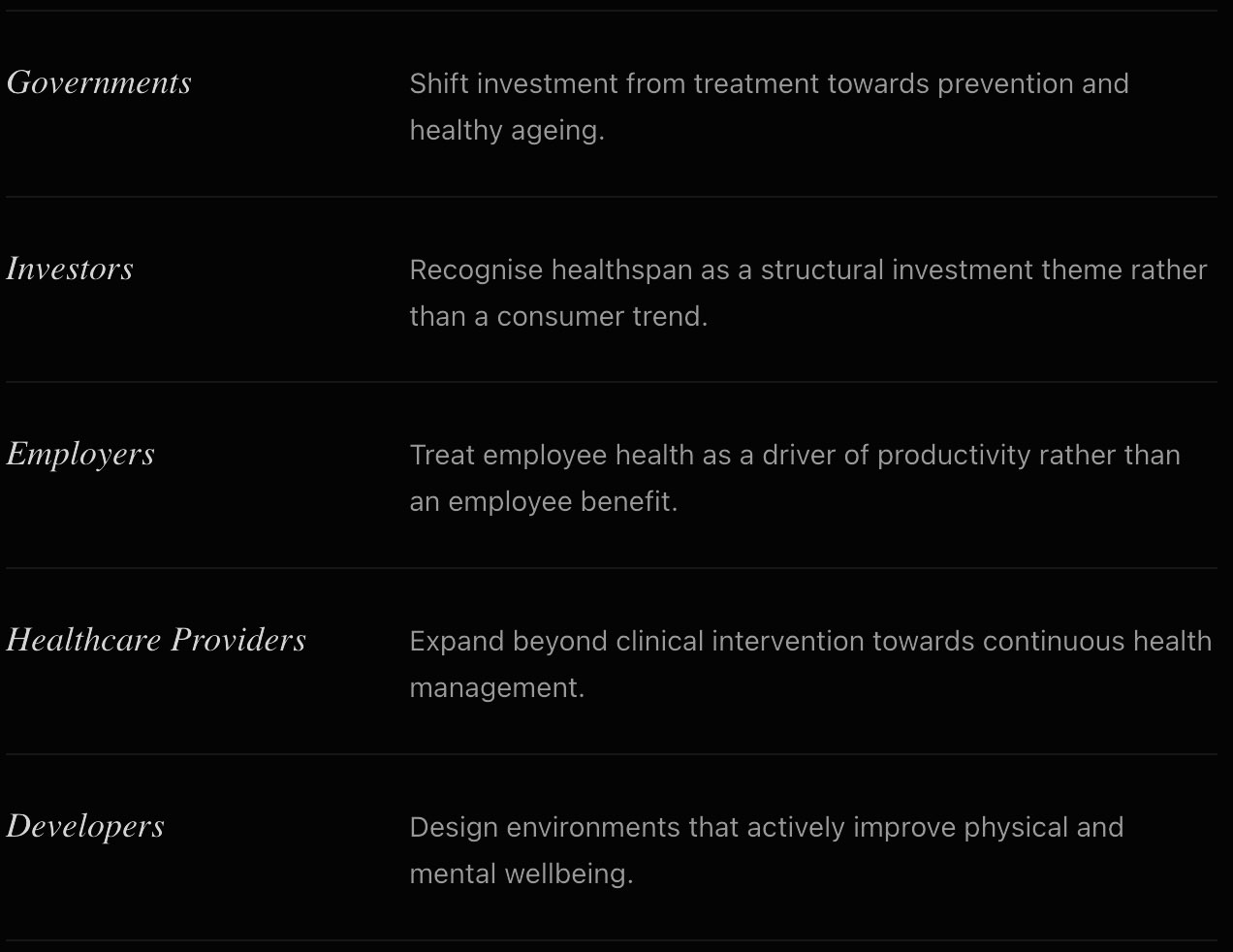
The coming decade is unlikely to be defined by individual gyms, clinics or recovery centres. It will be defined by integrated ecosystems that support health across every stage of life. Successful platforms will combine multiple capabilities into a seamless consumer experience.

The twentieth century extended life. The twenty-first century will redefine how those additional years are lived.
The organisations that succeed will not simply help people live longer.
They will help people live better, for longer.
By Prasad Hedge, Manish Raniga & Rajiv Sai
For more than a century, advances in medicine have been measured by one principal outcome: longer life expectancy.
Societies have celebrated increases in lifespan as evidence of progress, driven by improvements in sanitation, vaccines, pharmaceuticals and medical intervention. Yet longevity alone no longer defines success.
The challenge facing governments, employers, investors and healthcare systems today is not simply helping people live longer. It is enabling them to remain healthier, more productive and more independent throughout those additional years.
This shift, from lifespan to healthspan, represents one of the most significant structural transitions of the coming decades.
Healthspan, defined as the number of years lived in good physical, cognitive and emotional health, is rapidly becoming an economic imperative. Rising healthcare expenditure, ageing populations, chronic disease and workforce productivity are forcing policymakers and capital markets to rethink how health is created, measured and financed.
At the same time, consumers are fundamentally changing their relationship with health. Wellness is no longer viewed as discretionary spending or a luxury lifestyle choice. Increasingly, it is becoming an investment in future quality of life.
This paper explores why healthspan is emerging as a defining economic theme, how it is reshaping industries and investment strategies, and why organisations that recognise this transition early will be best positioned to create long-term value.
The emergence of the healthspan economy is not the result of a single innovation, but the convergence of several technological, demographic and behavioural shifts occurring simultaneously.While this paper establishes the macroeconomic case for healthspan, the underlying drivers of this transition and their implications for future business models will be explored in subsequent papers within this series.
For decades, the global conversation centred on one question. How can we help people live longer? The next decade asks a different question.
How can we ensure those additional years are worth living?
Medical innovation has extended life expectancy across much of the world. Yet the number of years spent living with chronic illness has also increased. A longer life without good health places growing pressure on healthcare systems, employers, families and public finances.
Health is no longer solely a healthcare issue. It influences:
As populations age, healthy years become one of the most valuable economic assets a nation can possess. Countries that improve healthspan may reduce healthcare costs while increasing labour participation, entrepreneurship and overall quality of life.
Historically, healthcare spending occurred after illness. Today's consumer increasingly invests before illness appears. Spending has shifted towards:
Consumers are no longer waiting for healthcare systems to intervene. They are proactively investing in maintaining performance throughout life.
The boundaries between healthcare, fitness, wellness and technology are rapidly disappearing. Consumers increasingly expect a connected ecosystem rather than isolated services.
These sectors are converging into a single economic category centred on human performance. The businesses that integrate these capabilities will be better positioned than those operating independently.
As these previously distinct sectors converge, value creation is increasingly shifting from individual products and services towards connected ecosystems that deliver measurable health outcomes.Understanding how these ecosystems will evolve, and what the next generation of healthspan platforms may look like, represents the next stage of this discussion.
Institutional investors have traditionally favoured industries characterised by recurring revenue, structural growth and resilient consumer demand.
The coming decade is unlikely to be defined by individual gyms, clinics or recovery centres. It will be defined by integrated ecosystems that support health across every stage of life. Successful platforms will combine multiple capabilities into a seamless consumer experience.
The twentieth century extended life. The twenty-first century will redefine how those additional years are lived.
The organisations that succeed will not simply help people live longer.
They will help people live better, for longer.
