
CHANGE IS inevitable.
METAMORPHosIS IS RARE.

Metamorph is the art of private investing reimagined
A dual narrative of the deepest pools of operational excellence; delivered through the language of AI...all to deliver a more perfect union between entrepreneurs & capital.

A more perfect union of entrepreneur & capital

The deepest pools of operational capability and talent

The first pure AI private investment platform
The world didn't need another investment firm; it needed something different, a metamorphosis.
The Metamorph investment system: A three-pillars approach


A disciplined investment approach
The deepest and broadest pools of operational capability
MetaMORPH's proprietary AI native platform
A disciplined investment approach
Our approach is defined as much by what we do, as what we don't. We invest exclusively in the $13.3 trillion pool of investment roll-ups, but by rejecting 97% of those investments, we develop portfolios with systematically lower risk, that amplify returns with unmatched speed to height.


The deepest and broadest pools of operational capability
Operationally savvy Private Equity will significantly outperform the rest of the industry and it's the only operational improvement is a replicable source of value that performs in all cycles of the economy.
At MetaMORPH we have codified our collective knowledge on how to attack trapped value and spur growth into a holistic methodology across 4 quadrants of value.


MetaMORPH's proprietary AI native platform
Our platform leverages advanced AI and machine learning to empower businesses to shed their old skins and emerge as stronger, more efficient leaders in their respective industries.


A disciplined investment approach
Our approach is defined as much by what we do, as what we don't. We invest exclusively in the $13.3 trillion pool of investment roll-ups, but by rejecting 97% of those investments, we develop portfolios with systematically lower risk, that amplify returns with unmatched speed to height.
The deepest and broadest pools of operational capability
Operationally savvy Private Equity will significantly outperform the rest of the industry and it's the only operational improvement is a replicable source of value that performs in all cycles of the economy.
At MetaMORPH we have codified our collective knowledge on how to attack trapped value and spur growth into a holistic methodology across 4 quadrants of value.
MetaMORPH's proprietary AI native platform
Our platform leverages advanced AI and machine learning to empower businesses to shed their old skins and emerge as stronger, more efficient leaders in their respective industries.
BORN FROM A UNIQUE DNA
Our roots trace to leaders from investing, banking, consulting and operating backgrounds, with experience shaped at firms including Bridgewater Associates, Arena Investors, Morgan Stanley, Comvest Partners, Kearney, PwC, McKinsey, Infosys and Amazon.
FOUNDERS
The roots of Metamorph can be traced back to management consulting, investment firms, investment banks, technology and operational roles, giving us the deepest and broadest expertise that exists.

Prasad Hedge has built a 25-year career at the intersection of private investment, operating transformation and institutional value creation. A former CEO, President, Chief Transformation Officer, strategy consultant and private equity leader, he has repeatedly led companies through moments where strategy, capital and execution must converge.
Prasad’s background combines hospitality, sport and restaurant management training in Switzerland with an MBA in International Business, giving him a rare operating lens across wellness, hospitality, consumer experience and investment architecture. At Metamorph, he pioneered an AI-enabled, operating-system-driven investment model designed to convert fragmented businesses into scalable platforms.
Prasad leads the overall investment thesis, vertical strategy, capital narrative and leadership architecture — ensuring the platform is not merely a collection of brands, but a category-defining human performance ecosystem.

Manish Raniga brings the financial, strategic and operating discipline required to turn an ambitious wellness thesis into an executable investment platform. His career has been shaped by leading companies through inflection points requiring restructuring, growth, capital alignment and operational reinvention.
With experience across major advisory platforms including PwC and McKinsey & Company, as well as senior CXO and transformation roles, and running multi-billion portfolios, Manish combines vision, institutional diligence with operator-level pragmatism. In the GCC, he has worked across significant hospitality and consumer-facing assets, including aviation and premium service environments where wellness, customer experience and lifestyle infrastructure increasingly overlap.
Manish has led the selection, underwriting, diligence and negotiation of the acquisition targets with deep insights into the unique GCC issues — translating the platform vision into disciplined transaction, capital structure and execution pathway

Jay Rajiv brings more than 15 years of experience across M&A advisory, private investment, commercial realestate, hospitality, wellness and growth-stage businesses, with deep grounding in the UAE and broader GCC market. His career sits directly at the convergence point of this platform: consumer experience, real estate activation, wellness operations and institutional growth.
Jay has operated as a founder, entrepreneur and growth leader, giving him the agility to build brands and the discipline to professionalize them. He understands how to move from concept to execution — sourcing opportunities, evaluating operating models, negotiating partnerships and translating strategy into an investable platform. Every business in this vertical has worked in tight partnership with Jay who orchestrates the cross –vertical operational needs and serves the cross-portfolio coordination.
Jay serves as the chief integrator across brands, operators, real estate partners and execution workstreams — ensuring the platform becomes operationally real, commercially relevant and scalable across clubs, hotels and branded residences.

Peter is a Managing Partner of Metamorph and co-leads the firm’s investment committee, strategic direction, new business initiatives, asset management and capital raising activities.
Peter has over 20 years of institutional private equity and private credit experience, having led or co-led strategies for prominent investment firms. In addition to serving as a Managing Partner at Metamorph, Peter is a co-founder and Managing Partner of Banyan Ridge Capital Management, a private investment firm based in Miami that is focused on non-traditional opportunities in corporate private credit, legal assets and special opportunities. Prior to founding Banyan Ridge, Peter was a Managing Director at a Miami-based investment firm with over $10 billion AUM at its peak, where he ran the Special Opportunities Private Equity and Private Credit strategies. In this capacity, he focused on sourcing, structuring, executing and managing complex and unique private equity and direct lending opportunities that were frequently uncorrelated to market conditions and structured to generate significantly outsized returns relative to the overall risk profile.
Previously, Peter was a Director for Arena Investors, a global investment firm headquartered in NYC with over $4 billion AUM, focused on illiquid credit and special situations. In this role, he led numerous non-sponsored and sponsored direct lending investments across various industries and geographies. Prior to Arena, Peter was a Vice President at Comvest Partners, a private investment firm with $15 billion AUM. Peter also worked for a middle market private equity firm and York Street Capital Partners, an investment firm focused on private debt and equity investments. Earlier in his career, he was an investment banker in the Leveraged Finance group at Morgan Stanley in New York.
Peter graduated cum laude from the University of Pennsylvania with a B.A. in International Relations with a Cluster in Business Studies from the Wharton School.

Sampson is a Vice President of Metamorph and focuses on investment underwriting, origination, execution and post-closing initiatives.
In addition to serving as a Vice President at Metamorph, Sampson is a Vice President at Banyan Ridge Capital Management, a Miami-based investment firm focused on private credit, litigation finance and special opportunities. Prior to joining Banyan Ridge, Sampson worked at Deerpath Capital Management and a Miami-based investment firm, where he focused on underwriting and executing investments across the capital structure in both private equity and private credit. He began his career a coverage banker at SunTrust Robinson Humphrey in New York.
Sampson holds a B.A. in Economics from Cornell University.


Dr. Chris Jensen brings an uncommon combination of medical authority, capital markets discipline and global operating judgment across Europe, the Middle East and Asia. With a medical degree from Cambridge, an MBA from Harvard and experience in global investment banking, he operates at the precise intersection where healthcare, capital, wellness and real assets increasingly converge.
His work has centered on translating clinical credibility into scalable commercial models across luxury hospitality, health-enabled real estate, longevity platforms and preventative care. He understands both the clinical governance required to protect trust andthe investment discipline required to institutionalize growth.
Chris anchors the longevity and clinical optimization thesis — ensuring that recovery, diagnostics, preventative health and medical-grade wellness are integrated with credibility, governance and investment-grade scalability.

Our VERTICALS
Healthcare remains one of the world's most fragmented and operationally constrained sectors. Many community healthcare businesses possess trusted provider relationships, recurring patient demand, and strong local reputations, yet lack the systems, capital, data infrastructure, and management capabilities required to scale efficiently.
Metamorph acquires and consolidates healthcare businesses where clinical trust already exists but economics remain under-optimized. By centralizing revenue cycle management, procurement, staffing, compliance, care coordination, reporting, and digital capabilities, we transform founder-led practices into outcome-oriented platforms with higher utilization, stronger margins, better patient coordination, and more durable earnings.
THE STRATEGY
Wellness and longevity sit at the convergence of healthcare, hospitality, prevention, diagnostics, recovery, nutrition, aesthetics, performance, and lifestyle. Consumers are increasingly willing to invest directly in healthspan, personalization, recovery, and premium preventive care.
Metamorph invests in platforms that convert trust, aspiration, identity, and community into recurring revenue. Rather than building capital-intensive fitness or spa concepts, we create high-margin ecosystems that combine diagnostics, treatments, memberships, coaching, recovery, movement, nutrition, aesthetics, and selective clinical services, generating both measurable outcomes and enduring customer loyalty.
THE STRATEGY
Aviation and aerospace are defined by regulatory barriers, specialized labor, certified facilities, and long-cycle customer relationships. Capacity is difficult to create because certification, technical credibility, operating history, and workforce capability take years to develop.
Metamorph invests in aviation services platforms where certified capacity, technical know-how, and customer trust create defensible market positions. By acquiring scarce capabilities, improving throughput, and selectively expanding into existing demand, we create businesses where operational discipline and certification translate directly into utilization, pricing power, customer retention, and strategic value.
THE STRATEGY
AI infrastructure is becoming one of the defining bottlenecks of the next decade. Enterprise AI, sovereign compute, inference workloads, and cloud migration all require access to power, data-centre capacity, GPUs, cooling, connectivity, financing, and specialized operating capabilities.
Metamorph invests in infrastructure platforms that control these critical constraints and convert scarce physical and digital capacity into long-duration cash flows. The opportunity is not simply to own hardware or real estate, but to assemble the infrastructure layer that enables AI adoption and benefits from contracted demand, utilization, financing efficiency, and structural scarcity.
THE STRATEGY
Real estate development remains highly fragmented across land sourcing, entitlement, design, construction, procurement, financing, sales, leasing, and operations. This fragmentation creates margin leakage, execution risk, and capital inefficiency across the built environment.
Metamorph invests in development platforms that control multiple stages of the value chain and institutionalize capital structuring, procurement, construction management, technology, and operating oversight. We further differentiate developments through the integration of wellness, longevity, hospitality, and branded experiences, creating pricing power, recurring income streams, and long-term customer engagement.
THE STRATEGY
FOUNDERS
The roots of Metamorph can be traced back to the the original management consulting, technology and investment firms giving us the deepest and broadest expertise that exists
As a Strategy Consultant turned Chief Operating Officer, his entire career has been focused on just one thing-making audacious metamorphosis happen. Equally focused on creating transformation plans that unlock sustainable growth, and having the capabilities to reliably actualize the outcomes the plans inspire .
With half my career hyper scaling growth companies and the other half renewing restructuring opportunities. His foundation was shaped through leadership roles in pre-eminent organizations like Bridgewater, AlixPartners and Kearney.
His life, work, and educational experience has spanned five continents. These experiences allowed personal metamorphosis and natural open-mindedness, intellectual curiosity and taught him to seek out and value diversity of individuals, thought, and team makeup.
Fueled by a professional and educational journey spanning four continents, Prasad's personal metamorphosis mirrors the inherent adaptability found in nature. He embraces diverse perspectives, fostering agility and open-mindedness when leading teams into the future.
Manish has been equally shaped by the financial, strategic and operational forces of leading companies through fragile points of reinvention. He has taken metamorphosis leadership from all angles: Transforming companies as a strategist, steering strategic change as the key operator, and championing innovation powered by technology as an equity owner.
His tour of commerce was systematically shaped by leading advisors like PWC and McKinsey&Co. He applied that to drive organisations as a key operator through restructuring and sharpened his skills in CXO roles during major restructuring or rejuvenating activities, working directly for shareholders and banks and increasingly through the lens of a private equity investor.
Shaped by global trends as he worked across the gamut of industries and geographies he shaped a highly evolved set of capabilities stress tested in diverse circumstances, he has led diverse global teams, learning from the wisdom of industry leaders and digital challengers. His personal metamorphosis was just as profound, having shaped himself as much as he shaped the economics and operating models of these organisations.
Fueled by cultural immersion, he has led diverse global teams, learning from the wisdom of founders and industry stalwarts. Like a caterpillar undergoing metamorphosis, he believes in the power of internal transformation, having reinvented himself multiple times throughout his career, each iteration akin to a butterfly emerging from its chrysalis, vibrant and renewed.
Evolving insights & news for a changing world
From Lifespan to Healthspan - Why the Next Global Economy Will Be Built Around Healthy Years, Not Longer Lives
A Thought Leadership Paper
By Prasad Hedge, Manish Raniga & Rajiv Sai
Executive Summary
For more than a century, advances in medicine have been measured by one principal outcome: longer life expectancy.
Societies have celebrated increases in lifespan as evidence of progress, driven by improvements in sanitation, vaccines, pharmaceuticals and medical intervention. Yet longevity alone no longer defines success.
The challenge facing governments, employers, investors and healthcare systems today is not simply helping people live longer. It is enabling them to remain healthier, more productive and more independent throughout those additional years.
This shift, from lifespan to healthspan, represents one of the most significant structural transitions of the coming decades.
Healthspan, defined as the number of years lived in good physical, cognitive and emotional health, is rapidly becoming an economic imperative. Rising healthcare expenditure, ageing populations, chronic disease and workforce productivity are forcing policymakers and capital markets to rethink how health is created, measured and financed.
At the same time, consumers are fundamentally changing their relationship with health. Wellness is no longer viewed as discretionary spending or a luxury lifestyle choice. Increasingly, it is becoming an investment in future quality of life.
This paper explores why healthspan is emerging as a defining economic theme, how it is reshaping industries and investment strategies, and why organisations that recognise this transition early will be best positioned to create long-term value.
The emergence of the healthspan economy is not the result of a single innovation, but the convergence of several technological, demographic and behavioural shifts occurring simultaneously.While this paper establishes the macroeconomic case for healthspan, the underlying drivers of this transition and their implications for future business models will be explored in subsequent papers within this series.
The End of the Longevity Debate
For decades, the global conversation centred on one question. How can we help people live longer? The next decade asks a different question.
How can we ensure those additional years are worth living?
Medical innovation has extended life expectancy across much of the world. Yet the number of years spent living with chronic illness has also increased. A longer life without good health places growing pressure on healthcare systems, employers, families and public finances.
The objective is no longer longevity alone. It is functional longevity.
Healthspan Is Becoming an Economic Indicator
Health is no longer solely a healthcare issue. It influences:
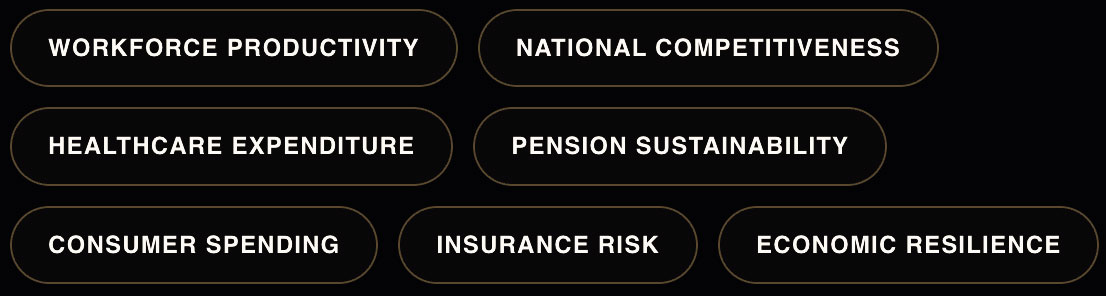
As populations age, healthy years become one of the most valuable economic assets a nation can possess. Countries that improve healthspan may reduce healthcare costs while increasing labour participation, entrepreneurship and overall quality of life.
Health is moving from a social outcome to an economic driver.
The Consumer Is Becoming the Primary Healthcare Investor
Historically, healthcare spending occurred after illness. Today's consumer increasingly invests before illness appears. Spending has shifted towards:
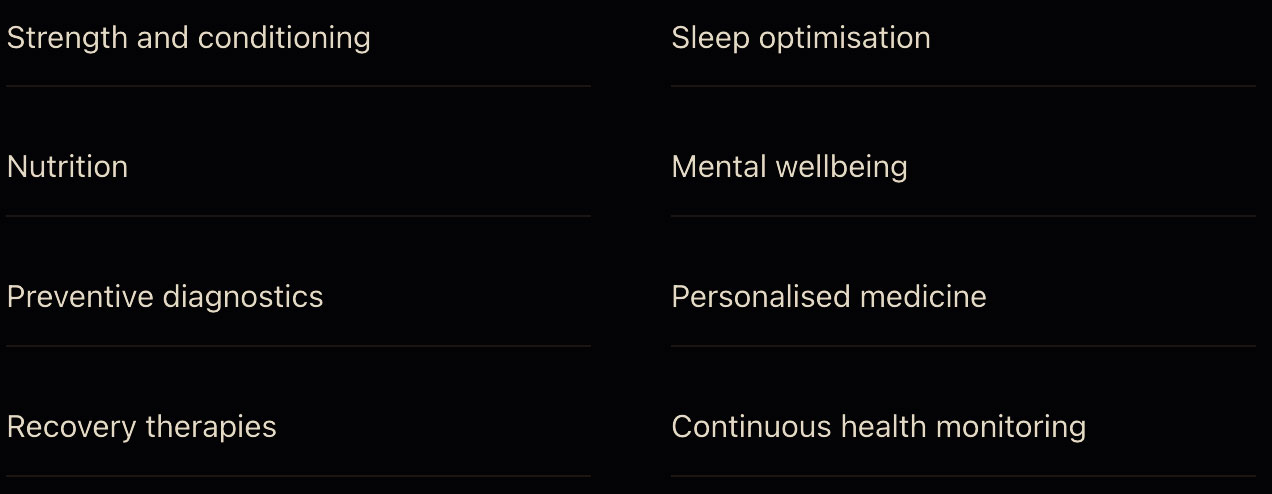
Consumers are no longer waiting for healthcare systems to intervene. They are proactively investing in maintaining performance throughout life.
The Rise of the Human Performance Economy
The boundaries between healthcare, fitness, wellness and technology are rapidly disappearing. Consumers increasingly expect a connected ecosystem rather than isolated services.
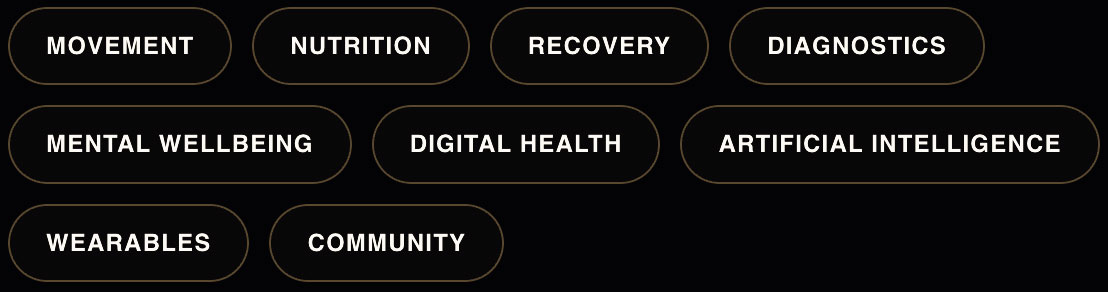
These sectors are converging into a single economic category centred on human performance. The businesses that integrate these capabilities will be better positioned than those operating independently.
As these previously distinct sectors converge, value creation is increasingly shifting from individual products and services towards connected ecosystems that deliver measurable health outcomes.Understanding how these ecosystems will evolve, and what the next generation of healthspan platforms may look like, represents the next stage of this discussion.
Why Investors Are Paying Attention
Institutional investors have traditionally favoured industries characterised by recurring revenue, structural growth and resilient consumer demand.
- Healthspan businesses increasingly demonstrate these characteristics.
- Long-term demographic trends support sustained demand.
- Consumers demonstrate strong willingness to invest in preventive health.
- Technology enables greater personalisation and scalability.
- Recurring memberships strengthen customer retention.
- Fragmented markets create opportunities for consolidation.
Rather than viewing wellness as a lifestyle category, investors are increasingly recognising it as long-term economic infrastructure.
Real Estate Will Follow Healthspan
- The built environment is beginning to evolve alongside consumer expectations.
- Residential communities increasingly compete on wellness amenities.
- Hotels compete through recovery experiences.
- Corporate offices prioritise employee wellbeing.
- Education incorporates movement and mental resilience.
- Healthcare facilities increasingly extend beyond clinical treatment.
- Future developments may be differentiated not simply by location or architecture, but by their ability to improve everyday health outcomes.
Healthspan is becoming part of placemaking.
Technology Will Democratise Preventive Health
- Artificial intelligence, wearable technology and continuous monitoring are making personalised healthcare increasingly accessible.
- Consumer scan now monitor sleep, cardiovascular health, metabolic performance, stress levels and recovery in real time.
- The next stage of healthcare will become increasingly predictive rather than reactive.
- Technology enables intervention before symptoms emerge.
- This fundamentally changes both consumer behaviour and healthcare economics.
The New Investment Thesis
The coming decade is unlikely to be defined by individual gyms, clinics or recovery centres. It will be defined by integrated ecosystems that support health across every stage of life. Successful platforms will combine multiple capabilities into a seamless consumer experience.

Consumers increasingly value outcomes rather than individual services. The organisations capable of delivering those outcomes consistently are likely to become category leaders.
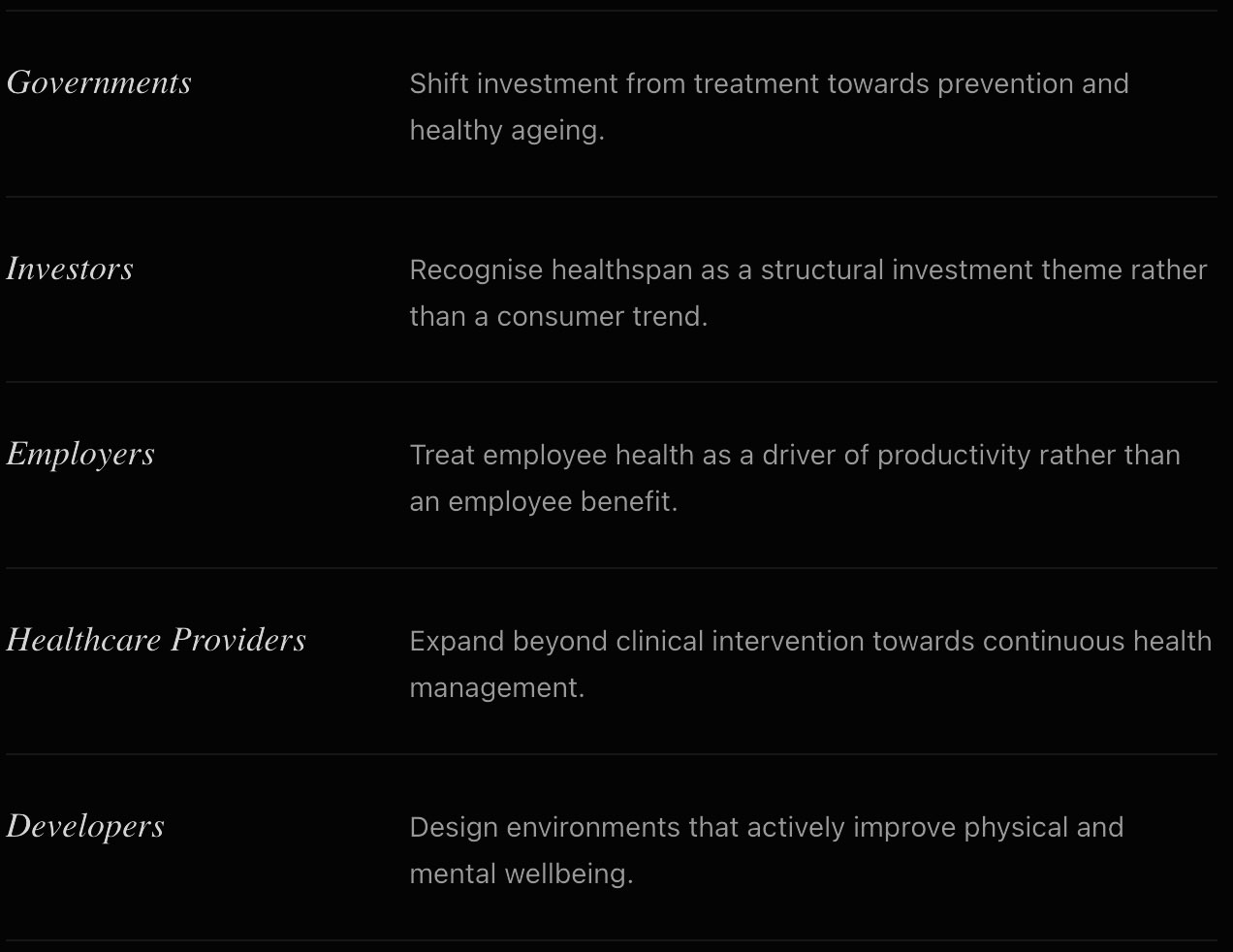
Implications for Leaders
Conclusion
The twentieth century extended life. The twenty-first century will redefine how those additional years are lived.
Healthspan represents more than a healthcare objective — it is emerging as a strategic economic priority that will influence capital allocation, urban development, workforce productivity and consumer behaviour for decades to come.
The organisations that succeed will not simply help people live longer.
They will help people live better, for longer.

July 25, 2026
From Lifespan to Healthspan - Why the Next Global Economy Will Be Built Around Healthy Years, Not Longer Lives
READ MORENova Capital and Metamorph Announce Strategic Partnership to Build a UAE-Led Wellness and Longevity Investment Platform
Joint Venture targets an initial USD 100 million in investment pipeline across wellness, recovery, nourishment, movement, social wellbeing and longevity assets
ABU DHABI, ABU DHABI, UNITED ARAB EMIRATES, July 8, 2026 /EINPresswire.com/ -- Nova Capital Enterprises, private equity arm of Al Nasser Holdings, and Metamorph today announced a strategic partnership to build, invest in and scale an integrated wellness and longevity platform anchored in the UAE and designed for regional and international expansion. The proposed platform will integrate fitness and movement, nutrition and nourishment, recovery, social wellbeing, preventive health and longevity into a connected customer journey. The parties intend to use AI and technology to enhance personalisation, member engagement, programming, data-led insights and operating efficiency. The Joint Venture is targeting an initial USD 100 million investment pipeline of assets, initiatives and acquisition opportunities across the UAE and selected international markets, growing to over USD 200 million in the medium term. The parties intend to invest in opportunities across movement, social wellbeing, nourishment, recovery and longevity, with the objective of creating a connected consumer journey rather than a collection of fragmented wellness offerings.

Nova Capital and Metamorph believe that longevity and wellness are becoming a generational disrupter in healthcare, lifestyle, hospitality and human performance. The partnership is being developed at a time when the global wellness economy is estimated by the Global Wellness Institute at USD 6.8 trillion in 2024 and forecast to reach USD 9.8 trillion by 2029.

The UAE is also emerging as a global reference point for regulation-aligned wellness and longevity. Dubai has established the Dubai Longevity Authority to support regulated longevity, wellness and advanced healthcare offerings, while Abu Dhabi has introduced standards for Healthy Longevity. Al Nasser Holdings and Metamorph believe this regulatory momentum creates a strong foundation for responsible innovation and scalable investment in the sector.
"The UAE has always had the courage to invest ahead of the future. Wellness and longevity are no longer niche ideas; they are becoming central to how people live, work, recover, age and participate in society. Through this strategic partnership with Metamorph, Al Nasser Holdings is making a long-term commitment to a sector we believe will define the next generation of health, lifestyle and human performance." - Abdulla Nasser. H Al Mansoori, Chairman, Al Nasser Holdings
"Longevity and wellness represent one of the most important market transitions of our time. The shift is from reactive services to preventive health span, from episodic consumption to continuous wellbeing, and from fragmented offerings to integrated platforms. Metamorph was built to identify these structural shifts and help scale the businesses that can define them." - Manish Raniga, Managing Partner and Co-founder, Metamorph
The partnership will initially focus on identifying and developing platform opportunities across the GCC, with the potential to include operating assets, acquisitions, partnerships, branded concepts, recovery and movement formats, nutrition-led concepts, wellness communities, diagnostic and preventive-health collaborations, and other regulation-aligned longevity initiatives.

Al Nasser Holdings brings UAE heritage, local operating depth, diversified investment experience and a long-term stewardship mindset. Metamorph brings investment architecture, AI enabled scaling capability, operating transformation and a thesis-driven approach to building platforms in structurally disruptive sectors. The parties said the partnership is grounded in mutual trust, respect, shared values and a common belief that the UAE can help define the next phase of regionally scalable, regulation-aligned wellness and longevity.
About Nova Capital Enterprises
Nova Capital Enterprises is part of Al Nasser Holdings which is a UAE-based diversified holding company founded in 1977. The group operates across a broad portfolio of sectors including energy and chemicals, real estate & hospitality, industry, food and beverages and investments. Additionally, through Nova Capital, the group is actively building strategic joint ventures and collaboration in high-impact future-facing sectors of wellness, logistics, data centre & technology.
About Metamorph
Metamorph is an AI-enabled private investment platform focused on identifying, investing in and scaling high-growth opportunities across structurally disruptive sectors through investment architecture, operating transformation, strategic partnerships and AI-enabled growth systems. Metamorph are building operator led investment platforms across healthcare, wellness & longevity, AI infrastructure, real estate development, logistics & industrials, aviation and energy & mining.
July 8, 2026
Nova Capital and Metamorph Announce Strategic Partnership to Build a UAE-Led Wellness and Longevity Investment Platform
READ MOREAdvisor, Heal Thyself!
The Consulting & Business ProcessOutsourcing (BPO) industries are both facing an existential crisis. Once pillars of cost-effective service delivery, these industries now find themselves undercut by AI and automation technologies. The real question is not whether AI will disrupt traditional consulting and BPO—it’s already happening—but which of the players will evolve fast enough to own the disruption, rather than being consumed by it.
This whitepaper argues that AI is both the greatest threat and the most significant opportunity for consulting and BPO firms. Simply adopting AI isn’t a panacea. Recent data from ISG reveals that while AI-driven projects are on the rise, customer satisfaction with those projects is declining. This paper explores why consulting and BPO firms are falling short, identifies the trends that underscore the urgency for reinvention, and outlines the bold moves these industries must make to thrive in a post-human workforce era.
For decades, consulting and BPO firms thrived by exploiting cost arbitrage—offering strategic expertise or outsourcing labor-intensive processes to manage customer service, operations, and more at scale. However, in recent years, AI hasn’t just nibbled at the edges of these models; it’s threatening to devour them. AI can now handle data entry, routine inquiries, and even complex troubleshooting, analysis, and decision-making in a fraction of the time and cost it would take a human consultant or BPO agent but increasingly high cognitive work and complex customer service are being effectively provisioned- BCG and McKinsey have talked about 30-50% of the strategy and complex analytical work they do now being delivered by Ai.
The consequences are clear: AI is erasing the low-level, high-volume work that has historically driven consulting and BPO profits. But despite the hype, early adopters are stumbling. The problem isn’tAI itself—it’s that some consulting and BPO firms fundamentally misunderstand the task at hand. It’s not about applying AI to change their clients; it’s about transforming themselves and their industry itself—addressing the structural, operational, and talent issues are requisites to AI to achieving its full potential.
Trend 1: Consulting and BPO firms are failing at AI implementation
Most AI initiatives fail to achieve their goals. Hundreds of billions in investments are not delivering the anticipated ROI. Clients are increasingly dissatisfied with AI projects, as the gap between the AI hype bubble and reality has never been wider.
This paradox stems from a fundamental flaw in the consulting and BPO approach: They are trying to bolt AI onto outdated operating models rather than reimagining the entire service delivery ecosystem with AI at its core. According to ISG’s recent report, 40% of consulting and BPO client’s express disappointment with AI-powered services, citing poor integration, inconsistent outcomes, and a failure to improve customer satisfaction. These projects often lack the agility to adapt to real-time demands, leading to frustrating customer experiences.
The lesson is clear: AI, when implemented as a superficial add-on rather than a deep, structural change, only magnifies existing inefficiencies.
Trend 2: AI-driven self-service is disrupting human-led consulting and BPO models
Self-service solutions are gaining traction among clients of consulting and BPO firms. According to McKinsey, AI-powered self-service models can reduce customer interactions by 40% to 50%. We don’t need to just “pave the cow path” – clients and their customers increasingly favor machine-only service options
The traditional consulting and BPO model—charging per hour or per agent—is collapsing under the pressure of automation. Companies are no longer willing to pay for bloated teams when AI can handle many inquiries and analyses faster and cheaper. The numbers tell the story: Global AI in customer service is projected to grow at a compound annual growth rate (CAGR) of 22% between 2023 and 2028. The more firms cling to outdated pricing models, the closer they come to irrelevance.
Trend 3: The shift from cost-cutting to experience-driven service
Today’s clients demand more than quick resolutions. They expect personalized, seamless experiences across every touchpoint. AI can enable this by offering hyper-personalized insights and real-time decision-making to human consultants and BPO agents. Yet most firms are stuck in the past, where efficiency and cost reduction are the sole priorities.
McKinsey research shows that firms focusing on customer experience, not just cost, can reduce client churn by up to 15%.AI-driven solutions, when thoughtfully integrated, can enhance client satisfaction by 20% through faster responses and tailored interactions. McDonald’s installed kiosks to eliminate labor- the outcome was no reduction in number of people but significant uplift in revenue and profit- the faster processing, customized offers and better throughput has improved the experience and unlocked value. But most firms have failed to embrace AI’s potential. Instead of leveraging AI to create superior client experiences, they’re using it to cut costs—neglecting the broader transformation it can deliver.

The harsh reality: AI is not a silver bullet – It's a double-edged sword
If AI was expected to save the consulting and BPO industries, it’s currently falling short. The real issue is not with AI itself, but with how it’s being deployed. In the next five years, we’ll likely see the extinction of firms that continue to rely on human capital while resisting full AI integration. Those that merely use AI to automate simple tasks—without addressing the deeper inefficiencies—will fail. The bold firms that survive will be those that reinvent their entire value proposition, usingAI not as a cost-cutting measure but as a force multiplier for experience-driven, outcome-based service delivery.
The roadmap for reinvention: Consulting and BPO in the AI era
The good news: AI doesn’t have to spell the end for consulting and BPO firms. But radical thinking and immediate action are essential. Here’s how these industries can survive and thrive:
1. From headcount to outcome-based models:
The traditional per-hour or per-agent pricing model is dead. Consulting and BPO firms must adopt outcome-based pricing, where success is measured by client satisfaction, retention, and other business outcomes. AI’s real power lies in delivering predictive analytics and proactive solutions. Firms that charge based on the value AI delivers, not the number of consultants or agents, will gain the competitive edge.
2. AI as a superpower, not an improvement:
Putting a spoiler on a turtle won’t make it a race car. Consulting and BPO firms need to deeply integrate AI into their service delivery ecosystem to augment, not replace, human consultants and agents. AI tools like real-time sentiment analysis, next-best-action prompts, and predictive insights should enhance consultant and agent performance, enabling them to solve complex issues faster and more effectively.
3. Deliver end-to-end client journeys:
Consulting and BPO firms must move from process-focused to experience-driven models. Deploying AI to anticipate client needs across every touchpoint will drive success. A Deloitte study found that companies with end-to-end AI solutions see a 25% increase in client satisfaction and a 30% boost in efficiency. But most firms are siloed, with the wrong talent to embrace AI.
4. Outcome and interaction-based pricing models:
One of the biggest mistakes consulting andBPO firms make is clinging to headcount-based pricing. Clients want providers who deliver results, not just bodies. Interaction-based and outcome-based pricing align the success of the firm with the goals of the client, optimizing every interaction for efficiency and satisfaction. Outdated RFPs and negotiation approaches have worsened this.
5. Upskill and Reskill – It’s not just about technology:
The human factor is still critical. AI can only augment human capabilities if those humans are trained to use it effectively. Consulting and BPO firms must invest in upskilling their workforce, enabling consultants and agents to work alongside AI, manage AI tools, and provide higher-level problem-solving. In doing so, firms create amore flexible, adaptive workforce capable of meeting future demands.
Conclusion: Consulting and BPO is dead. Long live consulting and BPO.
The consulting and BPO industries are at across roads. AI will kill them—but also lead to their glorious reincarnation.Data shows that current AI projects are failing to deliver, but the issue lies with execution, not the technology. The firms that survive will be those that fully embrace AI—not just to cut costs, but to drive deep, experience-driven transformations.
The clock is ticking, and the window for reinvention is closing fast. Only those willing to take bold, decisive steps will thrive in the AI-driven future.
Key takeaways:
1. AI is underperforming in consulting andBPO firms due to poor integration and failure to rethink the model.
2. Per-hour and per-agent pricing models are dead; outcome and interaction-based pricing are the future.
3. Consulting and BPO firms must deliver personalized, end-to-end client experiences, not just efficiencies.
4. Successful firms will empower consultants and agents with AI, not just replace them.
5. Urgent investment in upskilling and reskilling is essential to leverage AI effectively.
The survival of the consulting and BPO industries depends on their ability to fully embrace AI—not as a quick fix, but as the foundation for a client-centric future.

October 8, 2024
Advisor, Heal Thyself!
READ MOREThe numbers game: How AI is shaping the future of accounting
The AI revolution in accounting firms
Artificial Intelligence (AI) is set to revolutionise accounting firms. As technology evolves, AI’s potential to automate, analyse, and optimise processes presents a significant opportunity for the accounting sector. This white paper delves into the transformative power of AI, examining how it will fundamentally alter the operating model of accounting firms, enhancing efficiency, accuracy, and strategic decision-making.
The integration of AI into accounting practices is not merely a trend but a paradigm shift that will redefine the industry's future. By automating routine tasks, AI frees up valuable time for advisors to focus on higher-value activities, fostering more meaningful client engagements and driving growth. This paper explores the wide-ranging implications of AI for both accounting firms and their clients, illustrating how AI-driven enhancements will lead to more efficient operations, personalised service delivery, and robust financial insights.
Market dynamics and AI integration

Fragmented market structure:
The accounting industry, characterised by numerous small to medium-sized firms, stands to gain significantly from AI. By streamlining operations, consolidating data, and creating a more integrated market structure, AI can provide a competitive edge.
Growth and valuation potential:
AI’s ability to automate mundane tasks, enhance accuracy, and provide predictive analytics supports industries with substantial growth potential and valuation expansion. By leveraging AI, firms can achieve significant growth and valuation increases.
Transformative impact of AI on accounting operations
Enhanced efficiency:
AI optimises routine tasks such as data entry, reconciliation, and compliance, significantly reducing the time and effort required. This leads to notable cost savings and improved operational efficiency. For instance, Deloitte’s exploration of generative AI showcases how document preparation and processing can be accelerated, reducing weeks of work to mere days.
Real-Time insights and decision making:
AI tools offer real-time insights into financial data, facilitating proactive decision-making. By swiftly analysing vast amounts of data, AI uncovers trends and anomalies that would otherwise go unnoticed, enhancing strategic planning. Thomson Reuters highlights how AI can transform traditional workflow processes, providing accurate and timely financial reporting.
Improved accuracy and compliance:
Automated AI systems reduce human error, ensuring higher accuracy in financial reporting and compliance. This reliability fosters greater trust between accounting firms and their clients. KPMG’s insights show that Chief Accounting Officers (CAOs) are increasingly leveraging AI to enhance decision-making and ensure compliance.

Client-centric benefits
Enhanced service delivery:
With AI handling routine tasks, accounting firms can focus on delivering higher-value services to their clients, including personalised financial advice, strategic planning, and growth-focused consulting. This mirrors the client-centric approach seen in AI applications in broader finance roles.
Better financial health monitoring:
Clients benefit from AI-driven financial health monitoring tools that provide continuous oversight and early warnings of potential issues. This proactive approach helps mitigate risks and informs decision-making.
Customised reporting and insights:
AI enables the generation of customised reports tailored to clients' specific needs, providing actionable insights that help clients better understand their financial status and plan for the future.
High-quality engagement between advisors and clients
Freed-up mental bandwidth:
By automating time-consuming tasks, AI allows advisors to focus on more strategic and impactful activities. This shift enables deeper, more meaningful engagement with clients, fostering stronger relationships and trust.
Growth-focused advisory:
With more time and cognitive resources available, advisors can concentrate on identifying growth opportunities for clients, exploring new markets, optimising operations, and making strategic investments.
Enhanced advisory skills:
AI tools enhance advisors' capabilities by providing advanced analytics and insights, allowing them to offer more informed and effective advice, thereby driving client success.
Conclusion
AI is poised to revolutionise accounting firms by enhancing efficiency, accuracy, and client service. Automated systems will handle routine tasks, allowing firms to reduce operational costs while significantly improving the accuracy and speed of their financial processes. This transformation will lead to real-time insights, better compliance, and more robust decision-making capabilities, ultimately creating a more reliable and efficient accounting environment.
For clients, this means enhanced service delivery and more personalised financial advice. AI-driven tools will provide continuous financial health monitoring, customised reports, and early warnings of potential issues. With routine tasks automated, advisors can focus on strategic growth and value creation, fostering deeper and more meaningful client relationships. The future of accounting lies in harnessing AI to drive growth, efficiency, and enhanced client engagement, positioning firms to lead in a rapidly evolving financial landscape.

October 8, 2024
The numbers game: How AI is shaping the future of accounting
READ MOREThe misalignment between private investment firms and entrepreneurs: A call for sustainable transformation
The landscape of private investment, notably within private equity (PE) and venture capital (VC), has been partly characterized by misalignment between the objectives of investment firms and the long-term health and innovation of the companies they invest in. From experiences on both ends of the equation the root of the issue derives from focusing on the treatment of investments akin to “foster kids”—where short-term financial tactics are prioritized over sustainable growth and transformation of operations. Investment firms can realign their strategies to foster not just immediate gains but long-term success and innovation within their portfolio companies.
Short-termism vs. sustainable transformation
The “Foster-Care” syndrome
Investment firms often treat portfolio companies like foster children, caretaking but not nurturing for long-term success. This approach is evident in strategies emphasizing leverage, financial engineering, and other short-term levers. In times when capital is cheap and growth easyPrivate equity greatly outperforms While these tactics can boost initial returns, they frequently neglect the underlying health and potential of the business, leading to issues that surface after the investment horizon.
Long-term faltering of portfolio companies
Evidence suggests that while PE firms may realize short-term gains, their portfolio companies sometimes falter in the longer term. A study by Kaplan and Strömberg indicates that while PE-backed companies show improved operational performance post-buyout, they also exhibit increased leverage and higher bankruptcy rates, lower success compared to non-PE-backed companies. This dichotomy highlights the short-termism ingrained in many investment strategies, often at the expense of sustainable business growth and stability.

Risk mismanagement
Excessive risk taking
The pursuit of high returns has led some investment firms to take on excessive risk, neglecting the principle of risk optimization. This approach not only jeopardizes the stability of the portfolio companies but also exposes investors to potential losses. The 2008 financial crisis underscored the dangers of excessive risk-taking, where highly leveraged positions led to significant losses across the investment spectrum.
Alpha optimized
Data from the financial sector suggests that firms focusing on risk-adjusted returns, rather than absolute returns, tend to perform better over the long term. A McKinsey report on the economic profit of different companies revealed that those with a balanced approach to risk and innovation might underperform in the short-term they sustain higher growth rates and profitability over time. This finding underscores the importance of incorporating risk optimization into investment strategies to ensure both stability and growth to realize alpha.
The digital and AI competency gap
Emerging value creators: Digital, AI, and growth marketing
The digital revolution has introduced new value creation paradigms, notably through digital innovation, AI, and growth marketing. However, some private investment firms lag in these competencies, missing out on significant alpha generation opportunities. For instance, a BCG analysis highlights that companies leveraging AI and digital transformation initiatives can achieve revenue growth rates up to 5 times higher than their non-digital peers and while PE often scoop up Ai and Digital investments they fail to apply Ai and digital to their own industry model
Investment in competencies
The underinvestment in digital, AI, and growth marketing competencies by private investment firms is a missed opportunity for sustainable value creation. Often trying to engineer low fee-to-income ratios they are underdeveloped in methods that drive platform advantage. Investing in these areas requires not just capital but also a strategic shift towards understanding and leveraging emerging technologies and marketing strategies that can drive long-term growth.

Operational synergies and shared services
Unexploited operational muscles
The potential for creating operational synergies and shared services across portfolio companies remains largely unexploited. These strategies can drive significant cost efficiencies, improve operational resilience, and foster innovation through collaborative ecosystems.Despite their potential, many investment firms have yet to fully leverage these opportunities for value creation.
The essential role of operational platforms
Developing operational platforms that facilitate synergy and shared services is crucial. Such platforms can standardize processes, share best practices, and leverage economies of scale across the investment portfolio. For example, implementing a shared digital transformation platform can accelerate the adoption of digital tools and AI across portfolio companies, driving innovation and efficiency at a reduced cost.
Conclusion
Investment firms need to shift their strategies towards nurturing their portfolio companies to build enduring capabilities and sustainable growth—investing in the operational competencies that drive innovation, optimizing risk, and exploiting the untapped potential of operational synergies and shared services. By doing so, they can not only enhance their returns but also contribute to the long-term success and resilience of their investments.

July 8, 2024
The misalignment between private investment firms and entrepreneurs: A call for sustainable transformation
READ MOREAI is reinventing hire-to-retire for private equity: A catalyst for alpha creation
AI: Private equity's secret weapon in the talent war
In the cutthroat arena of private equity (PE), mastering talent management from hire to retire has become a key to creating investment alpha—a concept previously overlooked and under utilized. With AI and digital technologies now revolutionizing talent management, PE firms have unprecedented opportunities to innovate, enhance leadership, and cultivate dynamic cultures. While PE has been slow to attack the trapped value of talent across the value chain and across their portfolio companies- AI's transformative impact on the hire-to-retire process requires more orchestration, upfront investment and thoughtfulness to come top-down. This evolution is crucial in a tight labor market where talent management is directly linked to investment success.

The impact of AI on talent acquisition
AI: The ultimate recruitment game-changer
AI-driven tools are transforming recruitment by streamlining processes and improving outcomes. Machine learning algorithms can sift through vast applicant data to find candidates who not only meet job requirements but also align with company culture. Our study shows that AI in recruitment reduces time-to-hire by 35%, improves candidate quality by 30%, and speeds up productive employment by up to 50%.
Predictive analytics: Hiring for tomorrow, today
Predictive analytics allow PE firms to forecast hiring needs based on trends, business growth, and market dynamics, ensuring the right talent is in place for success. According to McKinsey & Company, companies excelling in predictive analytics are 1.3 times more likely to report superior organizational performance.
AI-enhanced talent development and retention
Personalized learning: AI as your personal career coach
AI facilitates personalized learning experiences by analyzing individual styles, performance data, and career goals. This tailored approach accelerates skill acquisition and boosts engagement. Research shows personalized learning powered by AI can increase engagement by 40%, and email analysis can predict new hire integration and managerial engagement, allowing timely interventions. Firms like Genpact were able to provide a digital learning and career platform that were able to reunify training and performance and career succession into a single digital blueprint- radically improving the employee experience while reducing cost and driving up workforce talent retention.
Performance management: Real-time feedback with AI
AI transforms performance management into continuous feedback loops, providing real-time insights into employee performance. Organizations using AI in performance management see a 20%increase in performance, according to a Gartner survey and with many acquisitions of Private Equity going through significant growth and change the impact can be more profound

Cultivating leadership and culture through AI
AI insights: Redefining leadership in PE
AI offers deep insights into leadership styles, decision-making patterns, and team dynamics, helping leaders refine their approaches. Leaders leveraging AI demonstrate a 30% improvement in decision-making effectiveness, according to the Center for Creative Leadership.
Vivienne Ming, Executive Chair and Co-founder of Socos Labs:
"I think what makes AI different from other technologies is that it’s going to bring humans and machines closer together. AI is sometimes incorrectly framed as machines replacing humans. It’s not about machines replacing humans, but machines augmenting humans"
Culture shaping: AI's role in creating dynamic workplaces
AI-driven analytics help PE firms understand and shape organizational culture by analyzing sentiment, communication, and engagement. Companies actively managing culture with digital tools see a 15% increase in financial performance, reports Accenture.
Silvio Saverese Chief Scientist at Salesforce says
“global competition is, unambiguously, about creative talent...Your creative talent will be who you are. Instead of chasing that race to the bottom on labor costs, invest in turning your talent into a team of explorers who can solve amazing problems using AI as the tool that takes the busy workout"
This paradigm shift changes the culture, leaders and job descriptions of the operating model.
AI: Essential for Winning the Talent Battle in Private Equity In a tight labor market, using AI and digital technologies in the hire-to-retire lifecycle is essential for private equity firms. By harnessing AI to streamline recruitment, personalize development, enhance leadership, and cultivate dynamic cultures, PE firms can vastly improve talent management strategies, driving investment success. AI is not just transforming the hire-to-retire process; it’s redefining the competitive landscape of private equity, making talent management a cornerstone of value creation.

July 8, 2024
AI is reinventing hire-to-retire for private equity: A catalyst for alpha creation
READ MOREWhat’s behind the performance divergence between private investing & public investing?
The quest for superior alpha creation is a constant in investing, shaped by the dynamics of risk and reward. At the heart of this journey lies a comparison between two distinct models: Private investing and Public Companies. Each operates within unique frameworks, guided by differing strategic imperatives and economic incentives.
Over the past years, I’ve delved into the complex narrative of when and why private equity (PE) firms outperform or lag behind their public counterparts. This analysis dissects the circumstances under which private equity shines or falls short, linking these outcomes to root causes inherent in both scenarios. It beckons a deep dive into the operational, strategic, and market-driven factors shaping PE investment outcomes, offering a balanced perspective on the advantages leveraged and the obstacles faced.
As we embark on this examination, it's crucial to consider the evolving landscape of global finance, where the distinction between private and public investment is increasingly blurred by macroeconomic trends, regulatory changes, and the relentless pace of innovation.

Part 1: The private equity edge: When PE can outperform public companies
Private equity (PE) firms operate fundamentally differently than public companies, leveraging specific strategies and advantages that can lead to superior performance, growth, and operational efficiency. After decades working on both sides of the equation, here are key observations on how PE can outperform public companies:
Lean growth
Private equity firms are known for actively managing their portfolio companies, implementing swift efficiency improvements. This hands-on approach can lead to significant value creation, particularly when combined with a culture that prioritizes speed-to-outcome and accountability.
A Harvard Business School study, "Private Equity and Industry Performance," found that industries with heavy PE investment showed improved productivity gains post-investment.
Escaping the quarterly grind
Unlike public companies, pressured to meet quarterly earnings targets, PE firms can focus on long-term alpha (excess risk-adjusted value creation). This allows investments in strategic initiatives that may not pay off immediately but generate significant returns over time.
The 2020 McKinsey Global Private Markets Review noted that private markets, including PE, outperformed in growth, with private market assets under management increasing from $2 trillion in 2000 to $6.5 trillion in 2018, indicating a successful long-term growth strategy.
The alignment advantage
PE aligns management interests with those of entrepreneurs and investors through significant performance-based incentives, often linking compensation to company success. This alignment drives stronger performance and reduces friction.
A study by the Journal of Finance, "Private Equity Performance: Returns,Persistence, and Capital Flows," indicates that this incentive alignment contributes to higher returns compared to public markets.
Agility of low bureaucracy operating models
PE firm scan make decisions quickly, without needing public shareholder approval or navigating extensive middle management. This agility allows them to capitalize on opportunities more rapidly and pivot strategies as needed.
TheBoston Consulting Group (BCG) highlighted in their report on private equity that the ability to act swiftly and decisively is crucial for PE investment success, particularly in rapidly changing markets
Targeting investing in growth
PE can provide substantial capital to fund growth initiatives, acquisitions, or restructuring without the constraints and dilution of public equity offerings. PE's demand for high ROI ensures a focused strategy, funding only actions with significant ROI. In contrast, public companies often fund a broader array of projects that may not be essential or high ROI.
The Global Private Equity Report by Bain& Company highlighted that PE continues to have strong access to capital, with record levels of dry powder (uninvested capital) available to fund new opportunities. This trend is evolving with higher risks and costs of capital, but it seems likely to prevail.
Fast is better than perfect
PE firms excel at identifying, acquiring, and integrating companies to drive synergies and growth. They often employ a buy-and-build strategy, consolidating markets to create more valuable entities. In our own Operating Partner teams, we demanded full integration of assets in 3-6 months, whereas public companies could plan multi-year integrations and research shows the duration the “patient is open” directly correlates to the probability of long-term success.
A McKinsey report on private equity's role in mergers and acquisitions noted that PE-backed companies are better positioned to execute successful M&A strategies, often leading to higher returns in a faster cadence.
It's important to note that while PE offers these advantages, outcomes vary widely among firms and individual investments. Performance also depends on market conditions, specific strategies, and management teams.

Part 2: The private equity achillies heel: when PE can lag public companies
In the high-octane world of investment, private equity (PE) stands out for its ambition to deliver outsized returns. However, risks and limitations may temper these financial triumphs over the long haul.
Short-term wins, long-term woes: The sustainability squeeze
The Roosevelt Institute highlighted a conundrum: while PE can engineer immediate profit spikes through rigorous cost-cutting, these tactics may erode a company’s long-term growth engines and employee morale. The focus on short-term improvements and expensive debt can leave firms underinvested in brand equity, innovation, and digital disruption, reducing value beyond the PE firm’s investment lifecycle.
Harvard Business Review warns that PE's heavy debt strategy can lead to defaults during economic downturns, eating into long-term value. The industry has overly focused on financial engineering, needing equal emphasis on operational renewal to thrive in the new economy.
Smoke and mirrors: The transparency trick
With less rigorous disclosure requirements, PE’s true performance can be murky. TheNational Bureau of Economic Research cites issues like 'appraisal smoothing,'which can disguise the real risk and return scenario. In reality, part of PE’s performance is beta dressed as alpha. In the upcoming economy, with higher regulatory and governance scrutiny, it’s imperative for the industry to manage risk-weighted returns actively.
Market rollercoaster: The timing trap
Bain Global Private Equity Report highlights timing risks: buy high or sell low, and PE magic dwindles. Market cycles are merciless and closed end timeframes of the industry can have PE funds diving in to sectors during market highs chasing the returns that better-timed funds achieve.
Conclusion: Navigating the highs and Lows of private equity performance
Examining Private Equity (PE) versus Public Companies reveals a complex landscape where strategic agility, operational efficiency, and incentive alignment play critical roles. This article aims not to pick a winner but to consider the strengths and weaknesses in each model, charting a path for the Private Investing firm of the future.
For investors, navigating the PE landscape requires vigilance and discernment, understanding the underlying factors influencing performance. In other whitepapers, we explore what must be protected, what must change in private investing, and share "postcards from the future" where deeper operational rigor meets the disruptive forces of AI and Digital to create the NextGen private investing firm that can perform with “all weather”capabilities.

July 8, 2024
What’s behind the performance divergence between private investing & public investing?
READ MOREHow the cyber CFO revolution will reinvent the finance / entrepreneur partnership in private equity
Transforming finance: AI as a catalyst for strategic value
McKinsey recently sized the seismic shift towards digital transformation in the private equity sector, noting that companies which embrace digital strategies can achieve up to 45% growth in revenue due to improved operational efficiencies and market reach. This shift is fundamentally repositioning CFOs from traditional financial stewards to architects of digital strategy, enabling entrepreneurs within portfolio companies to innovate and scale at an unprecedented pace.

AI-powered finance: From transactions to transformation
Generative AI "CFO copilots" are transforming finance functions by working alongside finance professionals to enhance core processes, reinvent business partnerships, and mitigate risks. These enhancements allow finance teams to make more informed strategic decision- making. Gartner estimates only a small portion of finance organizations (10-30%) operate this way but those who do are more profitable and efficient
Companies that are more Ai and digital according to Deloitte are 23% more profitable than their less digitally mature peers, but that superior performance is must also be in embodies in the finance and strategic planning of the company. PwC's Global Digital IQ Survey reveals that 86% of top-performing companies report that digital technology is integrated into all aspects of their strategic planning and financial planning.
Elevating efficiency: AI redefines financial operations
The efficiency gains for finance are massive. According to Harvard Business Review, companies implementing robotic process automation (RPA) and AI in their financial processes have seen a reduction in the time spent on financial close processes by up to 70%. We have seen companies reduce the time and effort for activities like Forecasting by 70% while also increasing the value-add accuracy by 20% through the use of technology.
Blockchain breakthrough: Transparency unleashed
The use of blockchain technology in financial transactions and reporting is poised to revolutionize transparency and efficiency. A report by the World Economic Forum predicts that by 2025, 10% of the global GDP will be stored on blockchain technology and AI will eliminate 30% of the traditional finance department workload. This innovative approach enhances the reliability of financial information, a key component of the Cyber CFO's agenda to maintain rigorous financial controls and transparency.
AI and compliance: Navigating complexity with intelligence
Amidst growing demands from regulators and investors, there is a critical need for private equity firms to adopt more intelligent and efficient approaches to controls and regulatory compliance. The integration of intelligent and lean digital sensors and predictive AI technologies for compliance and regulatory management is pivotal in meeting these demands. Such innovations allow CFO and CCOs to implement lean, effective interventions that enhance compliance and risk management without introducing unnecessary bureaucracy or costs. This approach not only upholds the entrepreneurial agility and innovation of portfolio companies but also addresses historical shortcomings in regulatory compliance and controls within the private equity sector.

Cyber CFOs: Leading the future of finance
The shift towards theCyber CFO reflects a broader transformation within the private equity sector, driven by digital and AI technologies. This narrative, enriched with data from reputable sources, provides compelling evidence of the significant benefits of embracing digital innovation. It highlights the opportunities for CFOs to drive strategic growth, operational efficiency, and financial discipline, ultimately empowering entrepreneurs to navigate the complexities of the market with agility and insight.
Through this evidence-based approach, the thesis that digital and AI are central to forging a new partnership between portfolio companies and corporate finance is not only supported but vividly illustrated, offering a clear roadmap for CFOs looking to navigate and thrive in the digital landscape.

July 8, 2024
How the cyber CFO revolution will reinvent the finance / entrepreneur partnership in private equity
READ MOREJoin the MetaMORPH team
Creating the future is hard work. It demands a relentless pursuit of innovation and a team of exceptional individuals. Are you a transformative thinker ready to reshape the investment landscape?